
I am not Fox News. I am not a Trump supporter. I am not a social justice warrior.
Issues of race related politics have recently been thrust to the forefront from American media headlines to blo-boy Twitter-fingers. Exacerbated by recent events, I believe that the power to vote holds greater direct power than protesting. As such, it’s no secret that this upcoming November 2020 election will help shape the post-COVID decade from a political, economic, and social standpoint.
Although I’m an American citizen, growing up with Indian immigrant parents has given me an Indian-American identity. I admit to having rudimentary knowledge of most aspects of Indian life and culture, yet I can comment on something that I believe can easily plague a sizable portion of the Indian-American community with respect to voting.
The American media currently excels at scrutinizing a handful of key individuals having seemingly immense governmental powers in Washington, proven by flagrant articles noting The Incestuous Relationship Between Donald Trump and Fox News. The supposed other side of the spectrum continues to perform no better, literally going to court over political media relations in the federal court case, CNN v. Trump. Yet with an obvious biased system of journalism combined with preferential treatment of select politicians, media significantly dissuades viewers into believing that this select group of politicians are end-all-be-all solution/source to our problems/solutions. Judging candidates selected, I believe that possible complacency of the Indian-American community resulting from the media and within can lead us into this very trap.
Voters tend to select candidates that look and behave similarly to themselves. We choose to identify with certain candidates – having similar upbringings, practicing same faith, or even having the same colored skin – but this clouds true judgement involved with what voting means. The nature of Indian-American communities can amplify this, with the selection of Joe Biden’s vice-presidential candidate Kamala Harris.
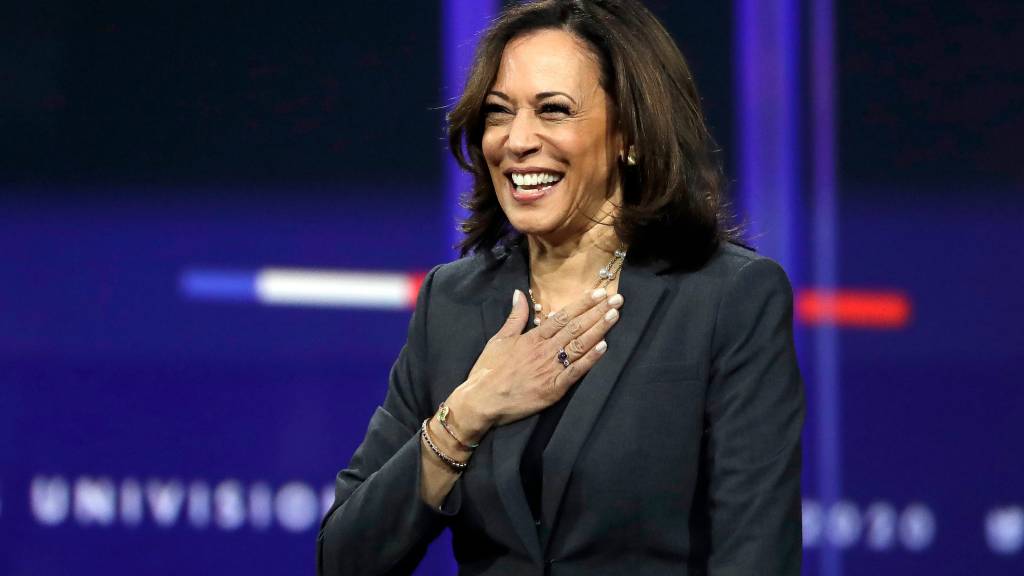
With the nomination of Harris, being half Indian origin, half Jamaican/Black origin, the Biden-Harris ticket found a sweet spot between two crucial voter demographics. I only speak from an Indian-background obviously, but generally believe that Kamala Harris has recently received excessive praise from the Indian community for simply making national headlines by being a VP-candidate with Indian roots. Numerous news outlets proceeded to write articles that either shower her with praise, or show national pride on her half-roots with hail-our-savior-esque pieces such as Nomination of Kamala Harris a moment of pride for Indians or Kamala Harris Pick for VP is Hailed as “A Moment of Pride” in India. Others even giving her mother praise for courage required to birth her as a 25-years old, an unimaginable fact for Indian-American youth of today. Several of my Indian friends will even bring up her ethnic background before mentioning politics or actions she supports – though a subliminal action, but one that highlights the problem.
Our society cannot worship Harris or any politician for the sole reason of the color of their skin or ethnic background – this breaks the entire meaning of voting, by filling out a ballot on the principles of prideful self-identification rather than educating ourselves and voting for a greater collective. By performing this disservice, we portray ourselves as no better than the thousands of Karens willing die on a hill for a guy who conned by creating a fake college. As an incredibly strong voter demographic, the Indian-American community must become educated with the topics that Harris supports, instead of blindly supporting the Biden-Harris ticket in the name of Brown pride.
The Indian-American voter demographic is a highly sought after division during all elections, accounting for nearly 1% of the entire US population in addition to consistently sporting high levels of voter turnout. Arguably one of the most financially successful ethnic groups, the Indian community takes pride in a high median income thereby creating value for single candidate donations all the way to large political action committees (PAC) such as the Asian American Freedom PAC or Indian Americans for Freedom. Evidently our community can pull large political force during any election. Yet, as a collective, we are so mesmerized with individual successes that we fail to see big picture problems until they appear on our front doorstep. Again, I believe it is incredibly important to become educated on relevant issues while we vote instead of letting pride and ego take control.
Kamala Harris supports several causes and maintains political stances that I believe are not held in the best interests of the Indian-American community. Harris supports an increased estate tax, and supports raising income taxes for households that make a combined total >$100k, lower than the median income of Indian-American families at $101,591. She vows to increase corporate income tax as well, while a record number of Indian CEOs maintain positions at Fortune 500 companies. As a proverbial nail-in-the-coffin, her actions bring forth a belief of having an anti-Indian/Hindu stance, while protesting Muslim-bullying in the state of Kashmir, but has not taken any explicit verbal stance against the matter. Harris, being the Indian “poster child” for American politics, does not make decisions with simply the Indian community in mind. In fact, I would be willing to argue that this problem doesn’t appear only with Indian-American politicians, but with both Democratic and Republican parties – being the reactionary nature of policies and the misrepresentation of minority group rights, resulting in a pecking order of importance based on ethnic group struggles. A political vision like this will never support ONLY what the Indian-American community as a collective generally believes as one of the wealthiest, most educated, prolific home-owning ethnic groups in America. As such, selfishly voting with our own Indian ideals currently does not work in the American system.
Speaking about biracial issues is not an easy topic for the very culturally-entrenched Indian-American community, though becoming more acceptable in an increasingly socially liberal society. Yet with respect to Harris, we perform a disservice by even treating her as culturally Indian and calling her one of “our own”. Harris herself has stated as being raised as black, and continues to raise her children as black children. She identifies as a black-Baptist, and attended Howard University in Washington DC, a historically black college. Though she visited Chennai as a child, and filmed an incredibly cringe video with Mindy Kaling eating dosa, the fact remains that our community treats people with any semblance of Indian roots achieving success on the global stage as important as the incarnations of Shiva without digging deeper at any key facts.
Our Indian community isn’t even consistent with showing support for all Indian candidates. Though Harris is the first successful Indian candidate part of a presidential ballot, she’s not the first Indian politician in the US – politicians such as Bobby Jindal and Nikki Haley literally walked so that Kamala Harris could run. However, their support for the Republican party suddenly taints them in the minds of Indian-Americans? This is highly hypocritical.
An important note, I am not trying to influence which candidate individuals vote for, but only trying to influence the thought process behind individual voting. Judging and nominating any candidates, yet alone any person for any position, by their ethnic background or their skin color is not what the voting process is about. Us as Indian-Americans have immense power in the voting process, and to vote based on pride while disregarding the motive of politics – to solve meaningful societal problems – makes politics in the US increasingly toxic. Don’t vote for Biden-Harris because of the half-Indian candidate, vote for them because they support the Black Lives Matter Movement, LGBT+ rights, healthcare upgrades, climate change, and education reform just to start.
Being ignorant and voting is still better than not voting at all. Find out how to register in your state at vote.gov
Much of the research for this article was found at the official 2020 Democratic Party Platform documentation. I suggest giving it a quick look before voting.
When I’m not commenting on randomness on the internet, I spend time on the Blood Pressure Blog Instagram page. Follow it here!
 Blood Pressure Blog
Leave a comment